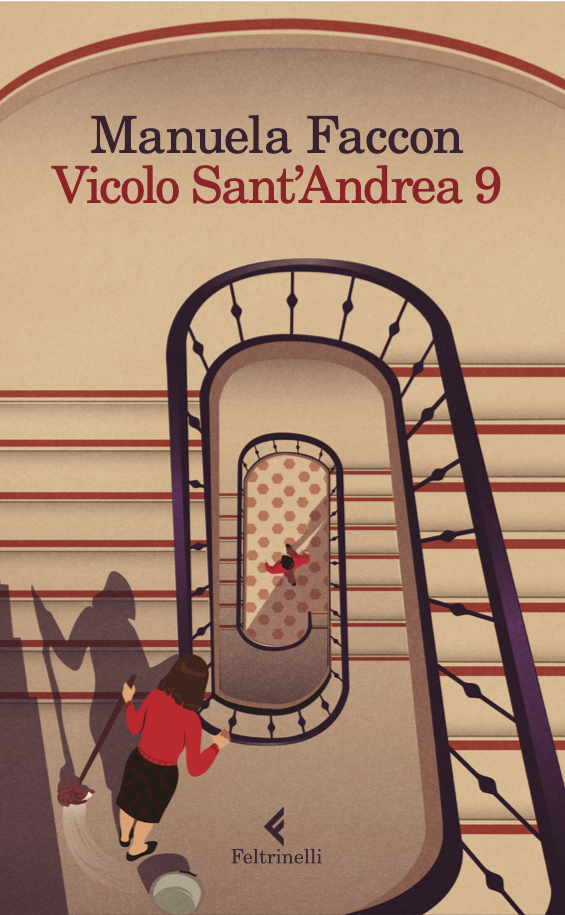
In the industrial North of Italy, set during the turbulent early 1920s, a young woman refuses to stay silent.
Elsa is alone in the world. Orphaned and hardened by loss, she works the punishing shifts of the Frizzi wool mill in Valsarto, where the machines roar, the hours stretch endlessly, and a single moment’s distraction can cost a life. But Elsa is no longer willing to endure the injustice that defines her days.
To improve the brutal conditions she and her fellow workers endure, Elsa knows resistance is the only path. Marching in the streets. Raising their voices. Claiming the right to decide for themselves. Inspired by the suffragettes of the United Kingdom, she dares to believe that even women like her—factory workers, overlooked and unheard—can demand the vote, and win it.
Slowly, her determination ignites a spark among the other women. And in the midst of this awakening, Elsa meets Italo, a young anti-fascist whose ideals mirror her own—and whose presence awakens something more personal, more dangerous.
But Elsa’s political passion is rooted in a deeper, more mysterious legacy. A suitcase sent by her last remaining relative containing fragments of a hidden past: copies of the earliest feminist publications in Milan, and clues to an inheritance that is as ideological as it is intimate.
As Elsa uncovers the truth about who she is, the world around her darkens. Fascism is on the rise. The cost of protest grows steeper. And soon, she must face an impossible choice: silence herself or risk everything to be heard.
With The Women’s Factory, Manuela Faccon delivers a powerful and emotionally charged portrait of a fierce young woman fighting for dignity in a country still learning what justice means. A story that resonates far beyond its historical setting, speaking urgently to the struggles of our present.
This novel is inspired by true events and the Biennio Rosso (“Two Red Years”) in Italy, spanning roughly 1919–1920, was a period of intense social unrest marked by widespread factory occupations, strikes, and political mobilization among industrial workers, especially in the northern regions of Piedmont, Lombardy, and Emilia-Romagna. In cities like Turin and Milan, metalworkers and textile laborers—often organized through socialist and trade union networks—took control of factories, forming workers’ councils and demanding better wages, reduced working hours, and greater political power. Women workers, particularly in the textile industry, played a significant but often overlooked role, joining strikes and participating in street demonstrations that challenged both economic exploitation and traditional gender hierarchies. The movement reached its peak in 1920, when hundreds of factories were occupied simultaneously, creating a revolutionary atmosphere that alarmed industrialists and the state alike. However, internal divisions within the socialist movement, combined with increasing state repression and the rising violence of fascist squads, ultimately led to the decline of the uprisings, paving the way for the consolidation of Benito Mussolini’s power in the early 1920s.